Google Will Pay for Your Heat Pump: What Heat Pump Grid Incentives Mean for Homeowners
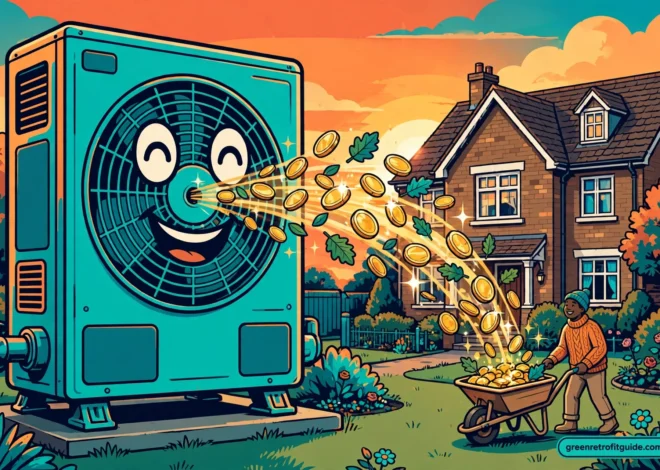
Google is fully funding a California pilot, SHARE, that knocks up to $10,000 off battery-enabled heat pumps in two Bay Area counties.
It is the sharpest example yet of heat pump grid incentives: programs that pay households for running their homes flexibly. The mechanics, and what utilities elsewhere pay for demand response, matter for your next retrofit too.
What the SHARE program is
SHARE, or Smart Home Assets for Reliability and Efficiency, was announced by PG&E in early September 2026 with Google, Tesla, Sunrun, Renew Home, Rewiring America, Carrier Global and analytics partners.
First, PG&E is enrolling roughly 21,000 devices already in San Jose homes, mostly batteries and smart thermostats from Tesla, Sunrun and Renew Home: about 12 megawatts of flexible capacity.
Second, homeowners in Santa Clara and Alameda counties get a Carrier battery-enabled heat pump at a deep discount: at least $5,000 off, $10,000 for the first 25, per pv magazine USA.
The unusual part: Google covers the incentives, deployment and delivery, with no public or ratepayer funds, a PG&E spokesperson told Latitude Media. The pilot runs through 2027, with findings due late 2026 or early 2027.
Why the grid wants flexible heat pumps
Demand is surging, and California’s average residential electricity price has hit 34.74 cents per kilowatt-hour, the highest in the lower 48 states per EIA data cited by Latitude Media.
A virtual power plant (VPP) meets that strain without new transmission lines: thousands of home devices, batteries, thermostats, battery-backed heat pumps, linked into one network the utility can nudge at peak hours. Your heat pump pre-cools the house in the afternoon and idles through the evening crunch.
It is exactly this flexibility that heat pump grid incentives are designed to reward.
“As demand scales, our current electricity grid can bridge the gap, if we optimize it correctly,” said Amanda Peterson Corio, Google’s global head of energy and power. A Rewiring America analysis estimates household upgrades like heat pumps, solar and storage could free up to 93 gigawatts of capacity on the existing US grid.
How heat pump grid incentives actually pay you
The same three mechanics show up in heat pump grid incentives and demand-response programs nationwide:
- Equipment discounts. The Google-funded $5,000 to $10,000 subsidy is extreme, but it stacks with federal heat pump tax credits and state rebates.
- Ongoing participation payments. PG&E says homeowners enrolling existing devices through the Tesla, Sunrun and Renew Home pool earn incentives paid separately from their bills.
- Lower bills from smarter timing. A battery-enabled heat pump shifts energy use away from expensive peaks automatically, storing comfort when power is cheap and coasting when it is dear.
For a concrete example, Powerwall owners in Tesla’s VPP partnership with PG&E’s Emergency Load Reduction Program earn $2.00 per extra kilowatt-hour delivered in a dispatched event, up to about $350 a year, per pv magazine USA’s coverage.
See Latitude Media’s full breakdown for the strategy behind it.
What to check before you sign up
Before joining any of these heat pump grid incentives programs, run through this checklist:
- Eligibility is narrow. SHARE covers Santa Clara and Alameda counties only. Elsewhere, search your utility’s site for “demand response” programs; the deals are local.
- It is a pilot, not a promise. PG&E calls SHARE a proof of concept through 2027; wider enrollment hinges on the pilot’s results.
- Comfort comes first. Only a correctly sized and installed system earns its keep. Get the load calculation and warranty in writing.
- Know what control you hand over. Programs may adjust your thermostat or dispatch your battery. Check the agreement for event limits, temperature caps, and opt-out rights.
- Stack incentives in the right order. Subsidies, tax credits and rebates each have their own paperwork. Confirm who files what before work starts.
The bigger picture for your retrofit
An NREL study funded by the US Department of Energy found heat pumps cut home site energy use by 31 to 47 percent on average, 41 to 52 percent with building upgrades, with median bill savings of $300 to $650 a year for the 49 million US homes on electric, oil or propane heat.
Demand response adds a second income stream: your heat pump becomes a grid asset someone pays you for, which is exactly what heat pump grid incentives are built to reward.
First make sure your existing kit is pulling its weight. Already running solar? Check it is producing what it should with this guide to why solar panels underperform and how to fix them.
Frequently asked questions
Is Google really paying for heat pumps?
Yes, in one pilot. Google fully funds SHARE with PG&E, including at least $5,000 off Carrier battery-enabled heat pumps in Santa Clara and Alameda counties, $10,000 for the first 25 households. It is a proof of concept, not a nationwide offer.
What is a virtual power plant?
A VPP is a network of small home energy devices, batteries, smart thermostats, battery-backed heat pumps, coordinated as if they were one power plant. At peak demand it shifts consumption instead of the grid firing up an expensive peaker plant. This coordination is the backbone of heat pump grid incentives.
The bottom line
Google writing checks for other people’s heat pumps sounds like a gimmick. It is a market signal: grid flexibility has growing value, and utilities plus tech companies will pay homeowners for it.
The playbook is the same either way: install an efficient heat pump, pair it with a battery or smart controls, and enroll in your utility’s demand-response program. The grid gets breathing room, thanks in part to growing heat pump grid incentives. You get a discount, a payment stream, or both.