October 2026 Energy Price Cap: What the £1,723 Rise Means and How to Cut Your Bills
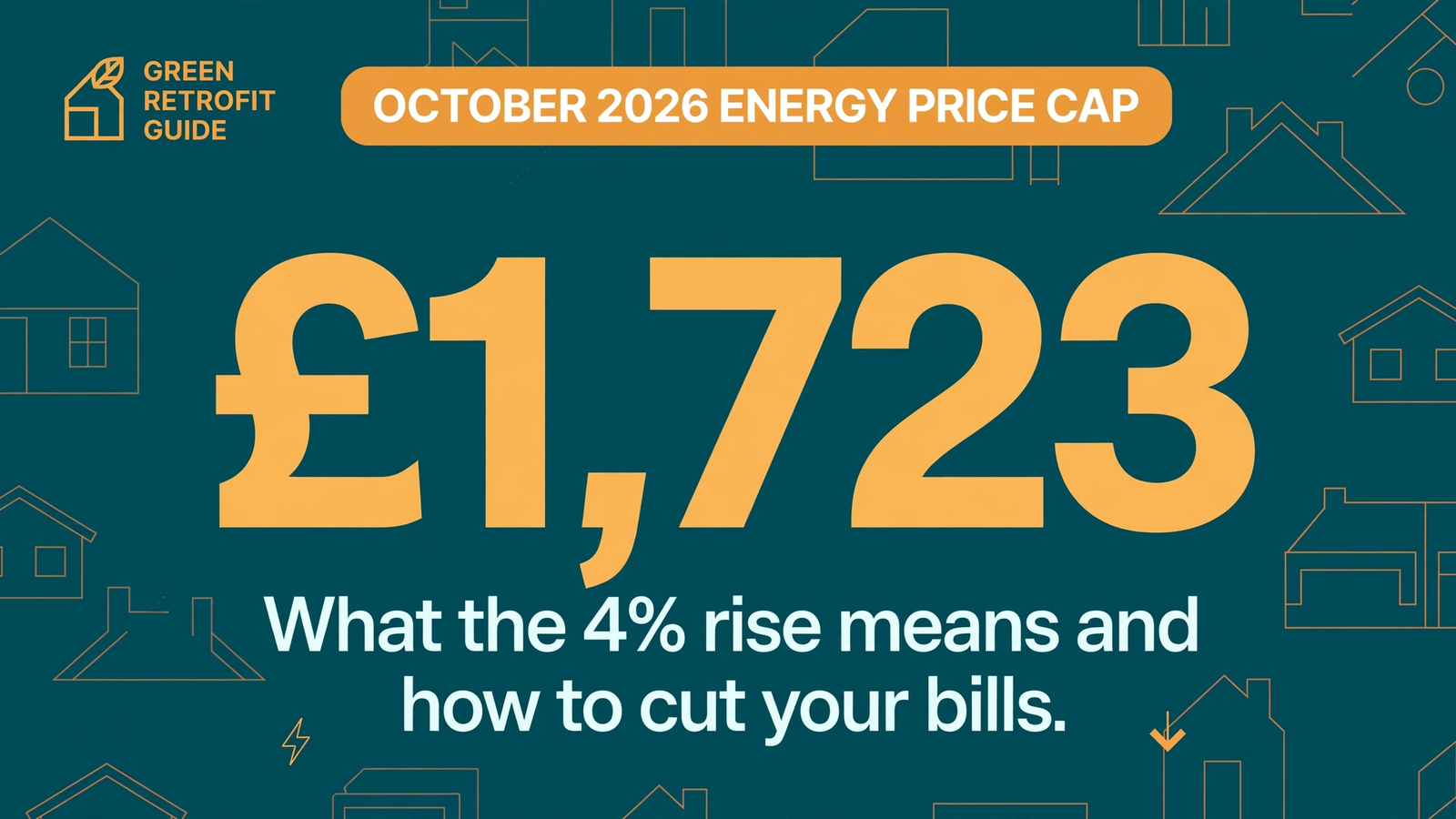
The short answer: Ofgem raised the energy price cap on 1 October 2026 to £1,723 a year for a typical dual-fuel household paying by Direct Debit. That is about £60 (roughly 4%) more than the £1,663 July cap. But £1,723 is not a limit on your total bill: Ofgem caps the unit rates and standing charges your supplier can apply, so what you actually pay still depends on how much energy you use. Most of this quarter’s rise falls on gas, while a simultaneous cut in VAT on electricity to 0% means households without gas will see their bills rise by less than 1%.
October is the month energy bills change, and this year the change is bigger than many households expected. If you are on your supplier’s default or standard variable tariff, the new rates are already on your bill. Here is what the new cap does and does not do, how much your own bill is likely to move, what forecasters say about January 2027, and the practical steps that can take the edge off the rise before winter.
What is the energy price cap?
The energy price cap is set by Ofgem, the energy regulator for Great Britain, and reviewed every three months. It limits the maximum unit rate (the price per kilowatt hour, or kWh) and the daily standing charge that suppliers can put on standard variable and default tariffs. About 22 million households on default tariffs in England, Scotland and Wales are protected by it.
The single most misunderstood point about the cap is that it does not cap anyone’s total bill. Ofgem is explicit about this: the £1,723 figure is an annualised illustration based on typical household consumption, currently set at 2,500 kWh of electricity and 9,500 kWh of gas a year. Use more than the typical amounts and you pay more; use less and you pay less. The cap also does not apply to fixed tariffs, and around 35% of households (about 11 million) are on fixed deals whose rates are locked until the contract ends.
What changed on 1 October 2026?
Ofgem confirmed the October to December 2026 cap on 26 August 2026. For a typical dual-fuel household paying by Direct Debit, the headline bill rises from £1,663 to £1,723 a year, an increase of £60 a year or about £5 a month if the new rates stayed in place for a full year. In practice the rates apply for three months, from 1 October to 31 December 2026, before the January review.
The new national average rates for Direct Debit customers are:
- Electricity unit rate: 26.32p per kWh (up from 26.11p)
- Electricity standing charge: 54.83p per day (down from 57.19p)
- Gas unit rate: 7.97p per kWh (up from 7.33p)
- Gas standing charge: 29.68p per day (up from 29.04p)
These are Great Britain averages; the rates you actually pay depend on your region, payment method and meter type. Ofgem said higher wholesale gas prices, linked to continuing conflict in the Middle East and volatile global gas markets, were the main driver of the rise. For context, prices remain about 52% below the height of the energy crisis in 2022, when the government stepped in to cap bills at £2,500.
Why did gas bills rise more than electricity bills?
Two things moved at once this quarter. Wholesale gas costs pushed the gas unit rate up by roughly 8%, so gas-heavy households carry most of the £60 rise. At the same time, the government cut VAT on domestic electricity from 5% to 0%, effective 1 October 2026 and running until 31 March 2027. The cut is applied automatically by suppliers, and it also reaches customers on fixed tariffs. Without that intervention the headline cap would have been around £45 a year higher.
The net effect is split. Households that use gas will see bills rise broadly in line with the 4% headline increase. Households that do not use gas, such as all-electric homes and heat pump owners, will see a much smaller increase of less than 1%, because the VAT cut roughly offsets the higher electricity unit rate for them.
What is the price cap forecast for January 2027?
Cornwall Insight, the energy consultancy whose quarterly forecasts are closely watched, predicted on 30 September 2026 that the January to March 2027 cap could reach £1,999 a year for a typical dual-fuel household, a rise of £276 or about 16% on the October cap. Its forecast unit rates are around 30.28p per kWh for electricity and 9.76p per kWh for gas, on the current typical-consumption basis.
That is a forecast, not a decision. Ofgem will confirm the January to March 2027 cap on 25 November 2026, and the number will move with wholesale prices between now and then. But it is a useful signal: if you can take action on your home’s efficiency now, you will benefit through whatever January brings.
How can you cut your energy bills this winter?
The price cap limits what suppliers can charge per unit, but you control how many units you burn. These are the measures with the best evidence behind them, starting with the cheapest.
Turn the thermostat down one degree
The Energy Saving Trust advises that lowering your thermostat by just one degree can save up to 10% on your energy bill. Most households are comfortable between 18°C and 21°C during the day, and the NHS guidance commonly cited by energy advisers is that rooms regularly occupied should be heated to at least 18°C, with particular care for older residents and people with health conditions. If you usually run at 21°C, try 20°C for a week; most people do not notice the difference.
Lower your boiler’s flow temperature
If you have a combi boiler, check the flow temperature, which is the temperature of the water it sends to your radiators. Many boilers are installed with it set between 70°C and 80°C, but condensing boilers run more efficiently at lower temperatures. Guidance from Money Saving Expert suggests turning it down to 60°C or less for radiators, and heating industry analysis has put the potential saving at around 9% of energy bills. Your rooms will still reach the thermostat’s target; the boiler just gets there more efficiently.
Bleed your radiators and keep them clear
Cold spots at the top of a radiator usually mean trapped air, which stops the radiator giving out its full heat. Bleeding radiators takes minutes with a radiator key and restores their output. Keep furniture, curtains and drying clothes away from radiators too, so heat reaches the room rather than the back of your sofa. Consider turning down the thermostatic valves on radiators in rooms you barely use.
Draught-proof windows and doors
Draughts are one of the most common causes of wasted heat in British homes. Self-adhesive draught-proofing strips for windows, brush strips for letterboxes and keyholes, and excluders for external doors are cheap, need no professional installation, and start working the day you fit them. Do not block trickle vents or extractor fans entirely: homes still need ventilation to control moisture and condensation.
Heat only the rooms you use, when you use them
A heating timer or smart thermostat that matches the schedule to your day avoids heating an empty house. Heating engineers commonly advise setting the system to come on only when needed and holding a steady temperature between 18°C and 21°C, rather than blasting the heating hard for short periods. If you work from home two days a week, your October programme will not fit your January routine; review the schedule as the weather changes.
Check your insulation before the cold arrives
Insulation is the single biggest lever most homes have, because it cuts the heat your heating system must replace. A quarter of heat in an uninsulated home escapes through the roof, so topping up loft insulation to the recommended depth is the classic high-return job, followed by cavity wall insulation where the walls allow it. If your budget is tight, check whether you qualify for help: the government’s insulation and grant schemes can cover loft, cavity and solid wall insulation for eligible households, and we map who qualifies in this week’s grant guide.
Should you fix your energy tariff now?
Fixing means swapping the price cap’s quarterly uncertainty for a locked rate, usually for 12 or 24 months. Comparison sites currently report some fixed deals priced below the October cap benchmark, with whole-market examples around £1,615 a year against the £1,723 cap. Whether fixing pays for you depends on your usage, your region and any exit fees, so run a comparison for your own postcode rather than taking the national average at face value.
The trade-off is straightforward. If Cornwall Insight’s January forecast proves close to the mark, a fix taken now could look cheap by spring. If wholesale prices fall before 25 November, the January cap could undershoot the forecast and a fixed deal could look expensive. There is no way to know in advance; a fix buys certainty, not necessarily the lowest price.
Frequently asked questions
What is the October 2026 energy price cap?
The annualised benchmark is £1,723 for a typical dual-fuel household paying by Direct Debit, based on typical consumption of 2,500 kWh of electricity and 9,500 kWh of gas a year. It applies from 1 October to 31 December 2026.
Is £1,723 the most a household can pay?
No. The cap controls the unit rates and standing charges on default tariffs, not your total bill. If you use more energy than the typical household, you will pay more than £1,723.
Will my fixed tariff rise because the cap changed?
No. The quarterly cap change does not reprice a fixed tariff. Your rates are locked until the contract ends, though the 0% VAT cut on electricity is applied to fixed-tariff bills automatically. Check your contract and any supplier notice for other changes.
Does the price cap apply across the whole UK?
Ofgem’s domestic price cap covers England, Scotland and Wales. Northern Ireland has separate regulatory arrangements.
What if I cannot afford my energy payments?
Contact your supplier as soon as possible. Ofgem requires suppliers to work with customers who are struggling, and options can include a repayment plan or emergency credit. Before the call, note your account number, the payment requested and what you can currently afford, and ask for any agreement in writing.
Figures in this article come from Ofgem’s price cap announcement of 26 August 2026 (via Installer Online and KilowattKit), Cornwall Insight’s January 2027 forecast of 30 September 2026 (via EnergyPlus), and the Energy Saving Trust via Which? All rates are Great Britain national averages for Direct Debit; your own rates depend on your region, payment method and meter type.

4 thoughts on “October 2026 Energy Price Cap: What the £1,723 Rise Means and How to Cut Your Bills”